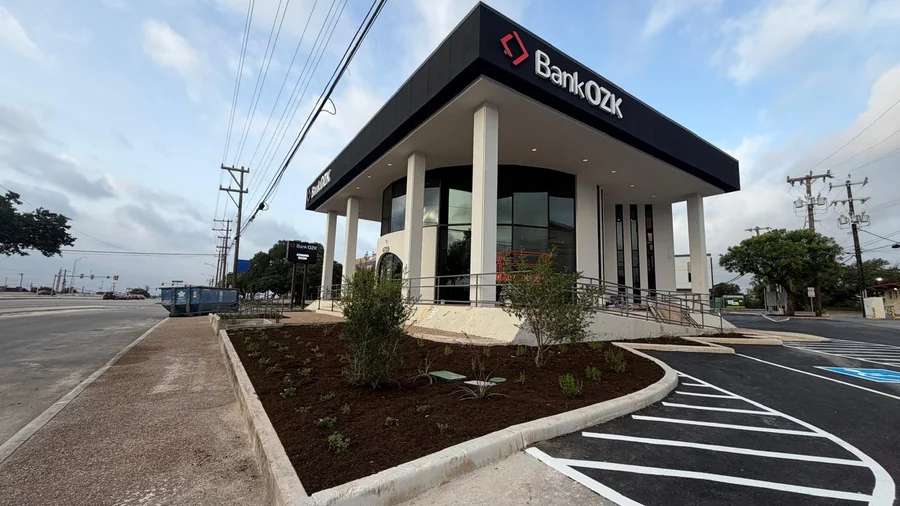
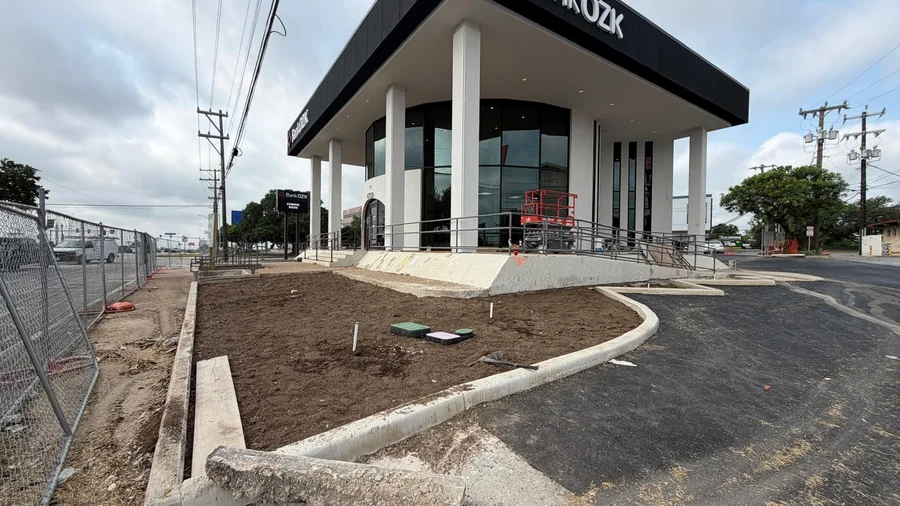
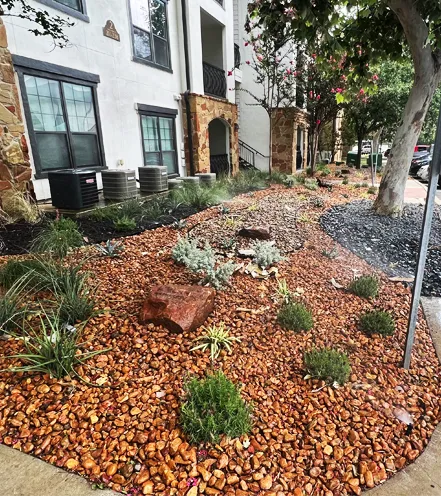
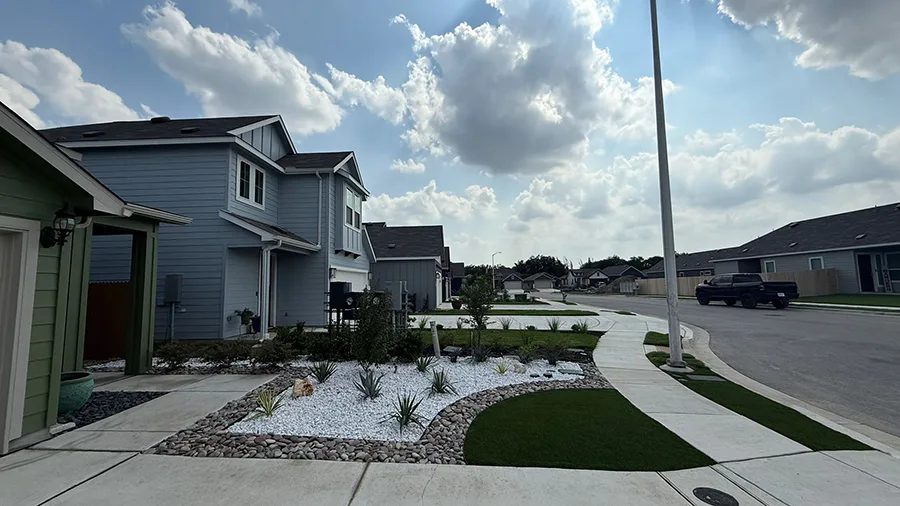
Parking-lot islands are the most visible thing nobody maintains
No part of retail landscaping San Antonio is more visible. They are what every customer drives past, and the first thing to look neglected. Islands bake, irrigation in them fails quietly, and the shrubs either die or swallow the curb. We treat them as a scheduled item, not an afterthought — trimmed to keep sightlines open at exits, mulched, and with irrigation actually checked.
Nothing blocks a tenant’s sign
Sightlines are the quiet job of retail landscaping San Antonio. Overgrown crape myrtles and untrimmed live oaks in front of a tenant’s storefront generate the complaint that lands on your desk and comes back up at lease renewal. We prune to keep pylon signs, monument signs and storefront glass visible from the road, and keep walkway clearance sensible for shoppers with strollers and carts.
Retail landscaping San Antonio scheduled when your tenants are not trading
Good retail landscaping San Antonio is invisible to shoppers. Crews finish early or work low-traffic weekday mornings. No blowers across a busy entrance at midday, and nothing scheduled across your peak retail weekends without agreeing it first.
Seasonal color timed to your calendar
Retail runs on seasons, and so does retail landscaping San Antonio. We plan and install seasonal color so beds land ahead of your trading peaks rather than after them, and we will tell you honestly which beds are worth planting and which are too shaded or too hot to hold color through a San Antonio summer.
Retail landscaping San Antonio ordinance obligations you are carrying
Compliance is part of retail landscaping San Antonio, not an extra. The City of San Antonio landscape ordinance sets a minimum 25% parking-lot shade, requires beds to be mulched to 4 inches, and puts an ongoing obligation on the property owner to keep plant material healthy. Dead trees in islands are not just ugly — they are a compliance gap.
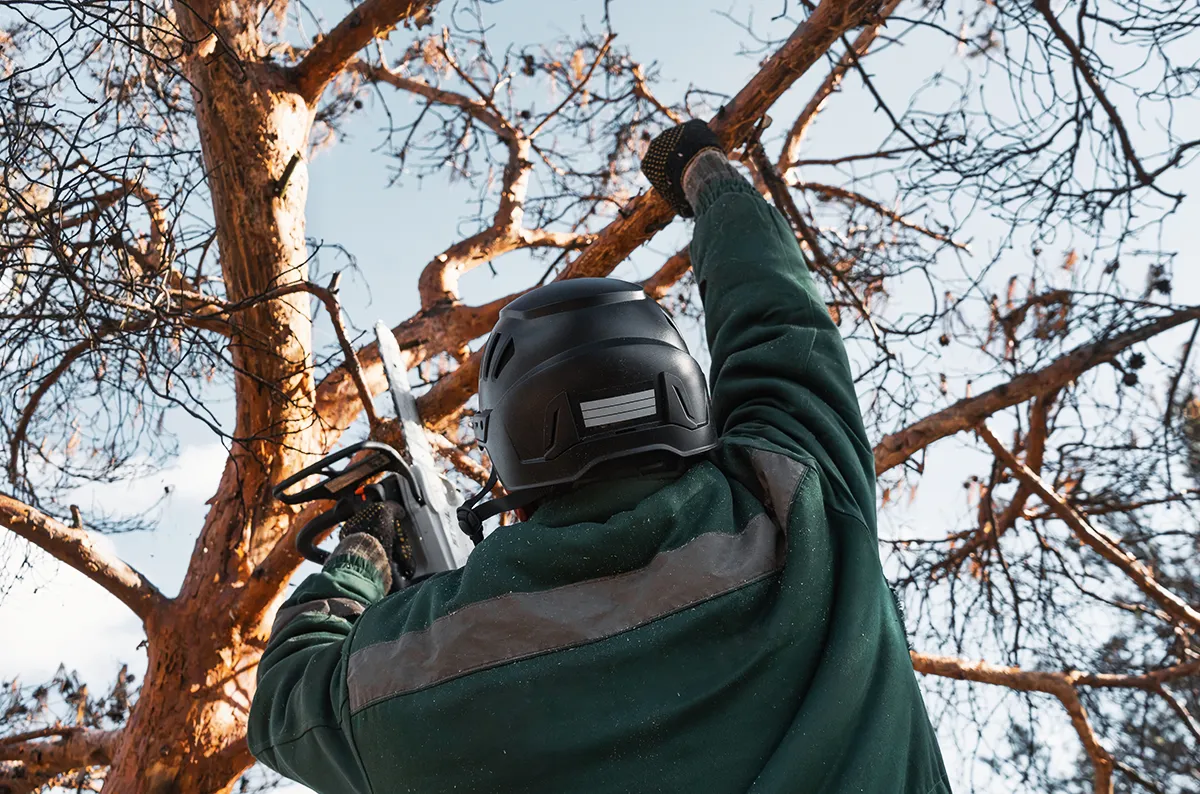
Tree work is the part of retail landscaping San Antonio with the highest cost of getting it wrong. San Antonio’s tree ordinance also protects significant and heritage trees on commercial property inside the city limits and roughly five miles of the ETJ. Removing one without a permit is an expensive mistake. We will tell you what is protected before anything comes out.
Water, SAWS rules and your CAM budget
Under SAWS Stage 2 drought restrictions — in effect since 4 August 2026 — irrigation runs once a week in assigned windows, and washing down parking lots, driveways and sidewalks is prohibited. As a TCEQ licensed irrigator (LI0028680) we audit zones, fix the leaks inflating a recoverable expense, and can prepare a SAWS Large Properties Variance application where a site genuinely needs one.
What belongs in a retail landscaping San Antonio contract
Most disputes between a center and its retail landscaping San Antonio contractor come from scope, not workmanship. A proposal you can hold someone to answers all of these in writing.
- Mowing and edging frequency by season. Turf here grows hard April through October and slows sharply November through March. A flat “weekly” line means you overpay in winter or go under-served in July.
- Islands and medians, itemized. They are the highest-visibility and highest-failure part of a center and they should never be bundled into “general grounds”.
- Tenant frontage. Who maintains the strip in front of each suite, and what happens when a tenant plants something themselves.
- Litter and pressure-cleaning. What is included and what is extra — and note that washing down parking lots and sidewalks is currently restricted, so a contractor promising it should be able to explain the exemption.
- Seasonal color. How many rotations, how many flats, and at which locations: entrance, monument sign, anchor frontage, pad sites.
- Irrigation. Whether zone inspections are included, how repairs are priced, and who carries responsibility for compliance.
- Trees. Where the grounds contract stops and an arborist call-out starts, usually set by working height or trunk diameter.
- Storm response. The response window after a named event, and whether triage is included or billed as extra.
Written that way, the scope also becomes the only fair basis for comparing bids. Two retail landscaping San Antonio proposals that look a few hundred dollars apart per month are usually quoting different work.
Why retail landscaping San Antonio shows up on your tenants’ CAM statements
Retail landscaping San Antonio is recoverable through common area maintenance, which means every tenant sees it and some will question it. That works in your favor if the scope is specific and the work is visible, and against you if it is a single line saying “landscaping”.
On a retail landscaping San Antonio contract we price and report by area, so you can show a tenant what is being done in front of their suite rather than defending a lump sum. When a center is reconciled annually, that documentation is the difference between a quick sign-off and a drawn-out argument.
The retail landscaping San Antonio problems specific to a parking lot
Retail landscape fails in ways a lawn does not, because most of it sits in a heat island surrounded by asphalt.
- Island shrubs cooking out. Reflected heat off asphalt and cars puts island plantings under far more stress than the same plant twenty feet away. Species that survive there are a short list.
- Chinch bugs in St. Augustine along the hot, sunny strips beside pavement — damage that looks exactly like drought and therefore gets watered instead of treated. Texas A&M AgriLife publishes identification guidance through its AggieTurf program.
- Broken heads in islands. Cars, delivery trucks and shopping trolleys take heads out constantly, and because nobody is standing in an island at 6 a.m. the zone can run broken for months.
- Trees outgrowing their soil volume. An island tree planted in a few cubic yards of soil will eventually lift the curb or decline. Better to plan the replacement than discover it.
Plant selection is where retail landscaping San Antonio budgets quietly leak. What holds up in island and frontage beds: dwarf yaupon and Texas sage for structure, lantana and salvia greggii for long color on almost no water, muhly and other ornamental grasses for movement. What does not: thirsty annuals far from a bib, anything spiny beside a walkway, and shrubs planted where they will eventually block a sign or a camera.
Grounds, safety and the things that become claims
On a retail site retail landscaping San Antonio and liability overlap more than anywhere else, because the public is on it all day.
- Trip hazards — roots lifting walks, settled valve boxes, heads sitting proud beside a path.
- Sightlines at exits — an island shrub allowed to grow above about waist height at a driveway is a visibility problem before it is an aesthetic one.
- Wet walkways from heads throwing across pedestrian routes.
- Dead and hanging limbs over parking bays and outdoor seating, particularly after storm season.
- Lighting obstruction — canopy growing into pole lights turns a well-lit lot into a dark one gradually enough that nobody notices.
Freeze preparation on a retail landscaping San Antonio site
Freeze prep is part of every retail landscaping San Antonio contract we run. San Antonio does not freeze often, which is exactly why systems here are unprepared for it. Backflow preventers and above-ground valves split first, and on a large center a broken backflow can run for days before it shows up on a bill. Before the first hard freeze we insulate exposed assemblies, drain where it makes sense, and make sure your on-site contact knows where the master shut-off is. Afterwards we walk and pressure-test the zones rather than waiting for a wet patch.
What we need to quote retail landscaping San Antonio for your center
A useful retail landscaping San Antonio proposal takes a walk-through, not a form. To price accurately we want:
- A site plan if you have one, and the approximate maintained area
- The number of irrigation zones and where the controllers are
- Your current scope and schedule, so we quote like for like
- The problem areas you already know about — the island that never recovers, the zone that floods the walk, the tree nobody wants to touch
- Your trading hours and any tenant-specific restrictions on service timing
We walk the center, price it, and give you a scope you can put in front of ownership or an asset manager. No charge for the walk-through, no obligation attached to it.
What the first 30 days on a new contract look like
Switching contractors is the part managers dread, usually because the last transition meant six weeks of nothing happening while someone worked out where the valves were. We front-load that work instead.
- Week one — baseline. We photograph the property before we touch it, so there is a dated record of what we inherited. That protects both of us.
- Week one — irrigation audit. Every zone run and observed, heads and valves mapped, controllers checked against the current watering day. This is where most of the immediate savings sit.
- Week two — punch list. A short written list of what is broken, what is dying and what is a safety issue, priced separately from the maintenance contract so you can decide what to do and when.
- Week two onward — the routine starts. Service windows agreed with your on-site contact, and photo-documented reports after each visit.
- Day 30 — walk it together. We walk the property with you and adjust the scope if the first month showed us something the bid did not.
Nothing there is unusual. It is simply written down, which is what makes a retail landscaping San Antonio contract easy to hand to ownership.
Where we work
We run retail landscaping San Antonio contracts across the metro and into the Hill Country, including Stone Oak, Shavano Park, Hollywood Park, Timberwood Park, Fair Oaks Ranch, Boerne and New Braunfels.
If you hold properties in more than one of those submarkets, they can sit on a single contract with one point of contact and per-property reporting, rather than a separate vendor and a separate invoice for each.
Why owners move their retail landscaping San Antonio contract to us
Three reasons come up repeatedly when a new client explains why they switched.
- The irrigation was nobody’s job. Plenty of maintenance firms mow well and hold no irrigator license, so leaks and broken zones run for months. We hold a TCEQ license and treat irrigation as part of the contract, not an add-on.
- Nothing was documented. Without photos and a written schedule, a manager has nothing to show ownership and no way to prove a missed visit.
- The scope quietly shrank. Work that was in the original proposal stops happening in year two, and nobody can point to the document that says it should.
Pad sites, outparcels and who is actually responsible
On most centers the landscape is not one property. The anchor pad, the outparcels and the common area can sit under different leases with different maintenance obligations, and the boundary is rarely marked on the ground.
That matters in practice because a tenant on a ground lease maintaining its own frontage will not match the standard of the common area, and customers do not see a lease boundary — they see one center where half the beds look neglected. Where a landlord wants a consistent look, the cleanest fix is to bring the outparcels onto the same retail landscaping San Antonio contract and bill them through their own line, rather than trying to enforce a standard through the lease.
We will walk the site with your lease exhibits and mark what we are quoting and what we are not, so there is no argument later about which strip of turf belonged to whom.
Signage, visibility and the leasing conversation
A prospective tenant touring a vacant suite is reading the center’s maintenance as a proxy for how the landlord operates. Dead islands and an overgrown monument sign cost leasing velocity in a way that is real but never shows up on an invoice. Keeping sightlines to signage and storefronts open is the single highest-return item in retail landscaping San Antonio, and it costs less than replacing the plants that die because nobody was looking at them.
Related: commercial landscaping · HOA landscaping · irrigation installation · sprinkler repair