
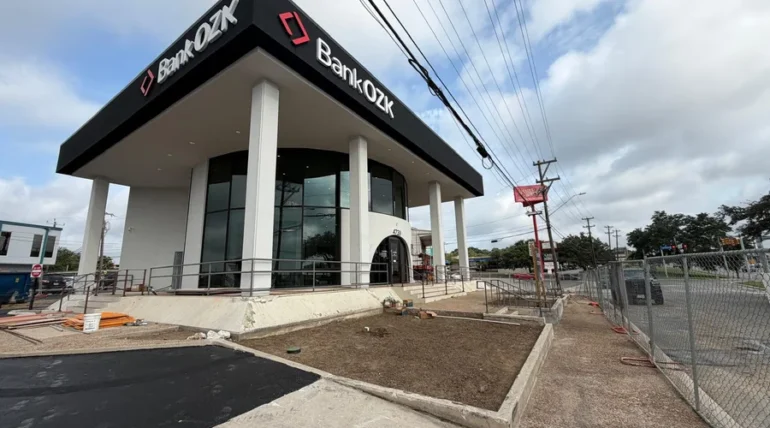
August 12, 2026
Shopping Center Grounds Maintenance in San Antonio: Who Pays, the Landlord or the Tenant?
In most San Antonio retail leases the landlord contracts shopping center grounds maintenance and recovers the cost from tenants through Common Area Maintenance, billed pro-rata by each tenant’s share of gross leasable area. So the tenants pay, through the landlord. The lease itself is the controlling document, so confirm any specific recovery question with your counsel or lease administrator.
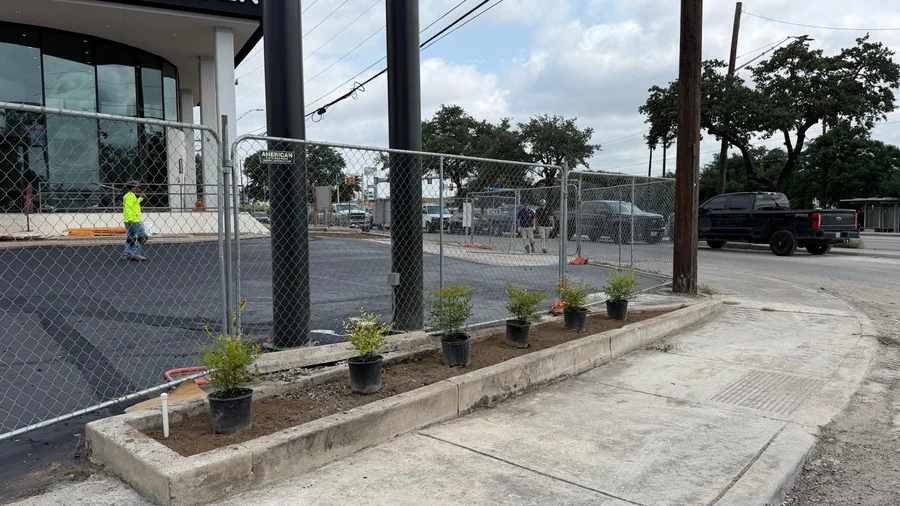
Shopping center grounds maintenance is one of the few CAM lines a tenant can stand in the lot and audit with their own eyes, which is why it draws more reconciliation questions than roof reserve and lot lighting combined. Design Scapes has maintained San Antonio commercial grounds since 2012.
Who actually pays for shopping center grounds maintenance in San Antonio?
The landlord signs the vendor contract and tenants reimburse it through Common Area Maintenance. Shopping center grounds maintenance is a common area operating expense, allocated pro-rata by each tenant’s share of gross leasable area.
A 1,400 square foot salon in a 42,000 square foot center therefore carries about 3.3 percent of the landscape spend. Anchors often negotiate caps or a fixed CAM, pushing more onto smaller tenants.
Lease structures vary enormously, so treat this as how it commonly works. The lease is the controlling instrument, and counsel or a lease administrator should answer any suite-specific recovery question.
What shopping center grounds maintenance costs are usually CAM-recoverable?
Recurring, routine work is normally recoverable. One-time improvements that extend the life of the asset are more often argued as capital, and many leases exclude or amortize them.
Recurring versus capital: the split tenants argue about
Typically sits inside CAM
- Mowing, edging and blowing
- Bed care, mulch and weed control
- Repair of existing heads and valves
- Seasonal color rotations
- Litter pickup and lot policing
- Routine tree trimming
More often argued as capital
- A full redesign of the frontage
- A new irrigation main or controller
- A specimen replacement tree
- New hardscape or planters
- Grading or drainage correction
- Work driven by a development approval
Illustrative only. Recoverability of shopping center grounds maintenance depends on how your lease defines common area costs, caps and exclusions. Not legal or accounting advice.
The gray zone is repair versus replacement. Fixing eleven spray heads is an operating expense; re-piping a zone is argued the other way. Work orders that separate the two make a retail landscaping program in San Antonio defensible.
Why do tenants challenge shopping center grounds maintenance first?
Because it is visible, it is monthly, and everyone believes they can price it. A tenant who watched a two-person crew spend 40 minutes on a two-acre center remembers it when the December statement lands.
The defense is not a lower price. It is a scoped contract with named frequencies per task and dated service reporting. A scope that says “maintain landscaping” cannot be defended; one that says “42 visits, beds detailed every visit, litter policed every visit” can.
What we see in the field: on San Antonio retail sites we have walked since 2012, the centers with the least CAM friction are never the cheapest. They are the ones whose manager can produce a dated visit log for the disputed month.
What documentation defends the shopping center grounds maintenance line when a tenant challenges CAM?
Assemble the record before the statement goes out, not after the challenge arrives. A tenant questioning the grounds line is rarely arguing the price. They are arguing that they cannot tell what was bought.
Five documents answer most of it: the executed scope with a frequency named per task, dated service tickets for the period, invoices that keep recurring work separate from capital, written change orders, and a map of the maintained area.
Photographs close the rest. Before-and-after images tied to a date and a work order turn “nobody came in December” into a closed item in one email.
Keep recurring and one-time work on separate invoices from the start. A line that buries a drainage repair inside a monthly maintenance charge is the fastest way to lose the argument about what belongs in CAM.
None of that decides recoverability. The lease governs shopping center grounds maintenance recovery, including caps, exclusions and the audit window, so route the determination to your lease administrator or counsel.
Where does a shopping center grounds maintenance budget go?
Mowing is the biggest single line but rarely a majority of the spend. Litter and lot policing take a larger share than most managers expect, because a retail lot generates trash daily.
How should shopping center grounds maintenance be scheduled around store hours?
Before the doors open, or during the mid-morning lull. Retail is the property type where schedule matters as much as scope: a blower crossing an entrance at 12:30 p.m. costs a tenant sales.
A shopping center grounds maintenance day, timed around trade
Mowing, edging and blowing. Trucks stage in a rear bay, never on the fire lane or a loading zone.
Bed detail, hand weeding at storefronts, litter pass, monument sign trim.
No blowers at entrances, no mowers near patio dining or a drive-through lane.
Irrigation checks, tree work needing a cone-off, anything occupying parking stalls.
Freeze the schedule. Litter, leaf and storefront detail only, blocking no access.
Write these windows into the contract rather than leaving them to the crew leader. The same logic drives grounds care at office buildings and business parks.
What shopping center grounds maintenance details do tenants notice daily?
Litter first. It is separate from mowing frequency and the most under-scoped item on a retail bid, yet it is what shoppers judge the center by.
Define the standard, not the effort: every visit includes a full police of parking islands, curb lines, shrub beds and the rear service area, and state whether litter passes happen on non-mowing weeks. A center on a bus line generates several times the litter of one set back from the road.
| Item | Standard to name in the contract | Why it matters |
|---|---|---|
| Storefront sight lines | Shrubs held below storefront glass | A screened sign is raised at renewal |
| Monument sign panels | Plantings clear of tenant panels | Often a lease-level obligation |
| Walkway clearance | Mulch swept back, limbs raised to 8 feet | Trip and strike exposure |
| Drive exit sight triangles | Grasses held low at every curb cut | Drivers must see oncoming traffic |
Texas premises liability holds that an owner owes an invitee a duty to make safe or warn of unreasonably dangerous conditions, and dated shopping center grounds maintenance inspections evidence that duty. Confirm the standard with counsel and your insurer.
What San Antonio rules change shopping center grounds maintenance?
Two constraints reshape the schedule, and both are worth telling tenants first. San Antonio Water System has enforced Stage 2 drought restrictions since August 4, 2026, limiting in-ground irrigation to one day a week, set by street address, and only from 5 to 10 a.m. or 9 p.m. to midnight.
Common areas without their own address, such as medians and entry islands, water on Wednesday. Stage 2 also prohibits washing parking lots, driveways and sidewalks, the rule most retail managers get caught by. A grease spill cannot be hosed off; a health and safety exception must be requested from SAWS.
The second constraint is oak wilt. The Texas A&M Forest Service advises against pruning oaks in Central Texas from February through June, and every oak wound should be painted immediately, year-round. Since San Antonio parking lots must reach at least 25 percent shade, lot island oaks are load-bearing assets.
How is shopping center grounds maintenance split at pad sites, outparcels and anchors?
Differently for a ground-leased pad than for inline space, which is where boundary arguments begin. An inline tenant draws entirely on common area service, while a ground-leased pad or outparcel commonly maintains its own parcel to the lease line and contributes on separate terms.
Anchors negotiate hardest. An anchor may maintain its own frontage and truck court, cap its contribution, or exclude items outright, which pushes more of the shopping center grounds maintenance cost onto smaller inline tenants.
| Area | Who commonly maintains it | Where the argument starts |
|---|---|---|
| Inline storefront beds and walks | Landlord, recovered through CAM | Whether litter and sight-line trimming happen every visit |
| Ground-leased pad inside its lease line | The pad tenant, on its own contract | Two crews, two standards, one shopper’s view |
| Island between a pad drive and the ring road | Usually the landlord | Rarely drawn on any exhibit |
| Detention pond or swale behind a pad | Depends on the lease and plat | Mowing frequency and access |
| Monument sign bed carrying pad panels | Landlord | Growth over a tenant panel |
Draw the line on a map. A scope reading “the landscaped areas adjacent to the premises” cannot be enforced, because two reasonable people read it two ways at the curb. An exhibit with the maintained area hatched, pad boundaries outlined and shared islands labeled settles it in the lot, not in the reconciliation.
What changes when a restaurant or drive-through is in the center?
More trash, more staining and much tighter scheduling. A restaurant, grocery anchor or drive-through changes the grounds job across the whole center, not only at that suite.
Trash volume moves first. A food tenant fills receptacles daily, the queue lane and nearest islands collect the most litter on the property, and a dumpster corral sheds cardboard into the closest shrub bed on a windy afternoon.
Grease is second, and washing the pavement is not available in Stage 2. Stop it at the source instead: corral gates kept closed, the pad swept, the tenant’s grease container held on a contained pad per its lease, and absorbent and sweeping in place of a hose.
Do not fight grease-soaked soil with replanting. Hardscape or gravel the strip beside a dumpster enclosure and hold the planting far enough back to survive.
Cart corrals and queue lanes finish the list. Corrals chip island curbs and crush shrub corners, and plantings along a queue must stay low for the driver’s sight line, so shopping center grounds maintenance at a food center is timed around lunch and dinner as tightly as around opening.
What visit frequency does shopping center grounds maintenance need?
Weekly through the growing season is the honest baseline for a San Antonio retail center. Less works only on a heavily hardscaped site with a strong litter spec.
| Frequency | Annual visits | What it realistically delivers |
|---|---|---|
| Weekly, year-round | 52 | Turf never out of height, no litter buildup |
| Weekly March-October, biweekly November-February | 36 to 42 | The common retail standard |
| Every other week, year-round | 26 | Turf outgrows height in May and September |
| Monthly | 12 | Recovery mowing, not maintenance |
Count the winter visits separately: a 36-visit year that quietly drops litter service from November to February is what tenants notice.
What shopping center grounds maintenance should be finished before Halloween?
Anything that blocks access, uses a lift or makes noise. The retail peak runs November and December, so work that cannot happen then has to close out in October.
By late October, finish the last hard trim of shrubs and hedges, raise canopy over walks and drive lanes so a delivery truck does not tear a limb, install the cool-season color changeover, refresh mulch at entries, and step irrigation down for cooler weather.
Do the drainage work before the fall rain. Clear inlets, curb cuts and swales while the crew is on site, because a flooded lot on a December Saturday is the one grounds failure a tenant still brings up at reconciliation.
Oaks run the other way. Structural oak pruning cannot happen February through June because of oak wilt, so October through January is the window, and every oak wound is painted immediately in any month.
Then put the holiday arrangement in writing before the season starts: which visits continue, who polices litter after peak weekends, and where crews stage. Shopping center grounds maintenance in those two months is a litter and access job, and it should be priced as one.
Key takeaways
- In most San Antonio retail leases the landlord contracts shopping center grounds maintenance and recovers it through CAM, pro-rata by share of gross leasable area.
- Recurring mowing, bed care, irrigation repair and litter typically sit in CAM; redesigns and new irrigation mains are argued as capital.
- The lease is the controlling document on every recovery question.
- SAWS has enforced Stage 2 rules since August 4, 2026: irrigation one day a week, no lot or sidewalk washing.
- Oaks should not be pruned February through June because of oak wilt.
Shopping center grounds maintenance FAQs for San Antonio managers
Who pays for shopping center grounds maintenance, the landlord or the tenant?
In most San Antonio retail leases the landlord contracts shopping center grounds maintenance and bills the cost back to tenants through Common Area Maintenance, pro-rata by each tenant’s share of gross leasable area. So tenants pay, through the landlord. Lease language varies widely, so a suite-specific recovery question belongs with counsel.
Is a landscape redesign recoverable through CAM?
Recurring work such as mowing, bed care and irrigation repair typically sits inside CAM. A full redesign, a new irrigation main or a specimen replacement tree is more often argued as a capital item. The split depends on how the lease defines common area costs and caps, so confirm it with counsel.
How often should crews visit a San Antonio strip center?
Most San Antonio strip centers run weekly from March through October and every other week from November through February, near a 36 to 42 visit year. What matters more than the count is that the contract names a frequency for each task, not just mowing.
Can a San Antonio shopping center pressure wash its sidewalks right now?
No. San Antonio Water System has enforced Stage 2 drought rules since August 4, 2026, and washing parking lots, driveways and sidewalks is prohibited. A health and safety exception can be requested from SAWS for a spill or hazard. Tell tenants before a stained entry draws a complaint.
What is the most under-scoped item on a retail landscape bid?
Litter and lot policing. It is what tenants judge the center by every day, and the item most often left vague at bid time. Shopping center grounds maintenance contracts should state how many litter passes happen per visit, whether islands and beds are policed, and who empties receptacles.
When during the day should the work happen at a retail center?
Crews should work before the center opens or during the mid-morning lull, roughly 6 a.m. to 10:30 a.m. Blowers should not run across entrances at peak trade, mowers should stay clear of patio dining and drive-through lanes, and shopping center grounds maintenance should go quiet in November and December.
Building a defensible shopping center grounds maintenance contract
Start with the reconciliation you will defend in eighteen months and write the scope backward from it. Name the frequency per task, the litter standard and the service hours, and require dated reporting. Design Scapes builds shopping center landscape programs for San Antonio retail properties that way.
The same discipline carries across commercial landscaping in Bexar County, community association common areas, and centers where landscape lighting at entries and lot islands carries the night presentation. Shopping center grounds maintenance is mostly a documentation problem in a mowing uniform.
Want a straight answer for your property?
Design Scapes has maintained San Antonio commercial grounds since 2012. We will walk your shopping center or strip center, measure the turf and bed areas, and send an itemized scope and price with no obligation.