
Every winter, San Antonio homeowners scramble for information when the first cold front approaches. One of the most common questions is:
“At what temperature will my sprinkler pipes freeze?”
The short answer:
👉 Sprinkler pipes begin freezing at 32°F — but damage often happens between 25–28°F if temperatures stay low for several hours.
The long answer depends on:
Pipe material (PVC is most vulnerable)
Whether water is sitting inside the pipes
Duration of freezing temperatures
Wind exposure
How deeply pipes are buried
Backflow preventer elevation
This guide explains the exact temperatures to watch for, what happens inside your irrigation system as temperatures drop, how San Antonio’s weather impacts freeze risks, and how to protect your system before the next cold snap.
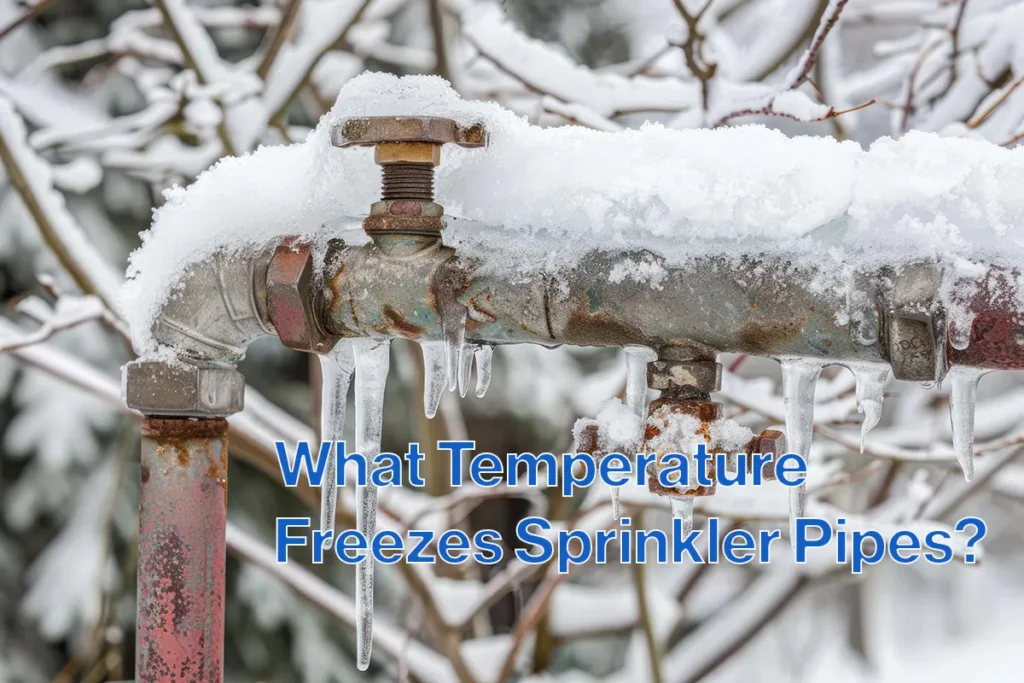
According to the National Weather Service, water begins freezing at 32°F, but irrigation pipes do not instantly burst at that temperature.
| Temperature | What Happens to Your Sprinkler System |
|---|---|
| 32°F | Water begins to form ice crystals in exposed parts. |
| 30°F | Shallow pipes, valves, and backflow preventers start freezing if exposed for 1–2 hours. |
| 28°F | PVC pipes are at high risk of freeze expansion. |
| 25°F and below | Underground zones can freeze, burst, or crack in multiple places. |
❗ Critical threshold for San Antonio sprinkler systems:
👉 28°F for 2+ hours
This is the point where real damage typically begins.
Unlike northern states, Texas irrigation systems are NOT installed for long-term freezes.
Most San Antonio residential systems:
Use shallow PVC lines
Have exposed backflow preventers above ground
Are buried with minimal insulation
Lack automatic freeze protection
Sit in shaded areas where cold air sinks
San Antonio also experiences rapid temperature drops, which make freezing more likely, even in mild winters.
The City of San Antonio issues freeze warnings frequently from December through February:
Pipes don’t burst because water freezes —
they burst because ice expands by 9%, increasing pressure inside the pipe until it splits.
Most damage occurs:
In elbows
In valves
Around joints and fittings
In PVC lines under stress
Inside backflow preventers (the most common failure)
Even if only part of the pipe freezes, the pressure affects the entire line.
This depends on air temperature, pipe depth, and wind exposure.
Here’s a general guideline for San Antonio systems:
| Temperature | Time Until Damage May Occur | Risk Level |
|---|---|---|
| 32°F | 4–8 hours | Low |
| 30°F | 2–6 hours | Moderate |
| 28°F | 1–3 hours | High |
| 25°F or lower | Under 1 hour for exposed parts | Severe |
Because Texas freezes rarely last long, many homeowners underestimate the risk — until they see burst PVC cracks in the spring.
Signs your irrigation system may have already experienced freezing:
Water spraying from random areas
Soggy ground even when sprinkler is off
Zero pressure in certain zones
Sprinkler heads popping up only halfway
Cracked backflow preventer
Dripping valves or test cocks
Whistling or hissing noise near the manifold
If you notice any of these signs, shut off the irrigation water immediately and contact an irrigation specialist.
San Antonio homeowners should prepare irrigation systems as soon as freeze forecasts are issued.
This prevents any accidental runs during freezing temperatures.
Even smart controllers can run unexpectedly if not paused.
Manual drains
Automatic drains
Blow-out for large systems
Whichever applies to your setup.
Especially:
Backflow preventer
Test cocks
PVC connected to the PVB
Valve assemblies
Use foam insulation + weatherproof tape.
A simple $10 insulation bag can save you $300–$750 in repairs.
If a freeze is predicted within 24 hours:
Shut off water
Turn off controller
Open test cocks
Wrap the backflow immediately
Add faucet covers to nearby hose bibs
Check all exposed PVC
This will protect 80–90% of your system.
San Antonio irrigation systems are NOT built like northern systems.
Local risk factors include:
Shallow pipe installation
Above-ground PVBs
Fast-moving cold fronts
Clay soil that retains cold longer
High water pressure increasing pipe stress
The 2021 Texas freeze proved that even short-term cold snaps can cause widespread irrigation damage.
While the freezing point of water is 32°F, your irrigation system becomes vulnerable much sooner than most homeowners expect.
A good rule for San Antonio:
👉 Protect your system anytime temperatures drop near or below 30°F.
Winter preparation is simple, inexpensive, and dramatically reduces the risk of costly spring repairs.
Need help protecting your system?
Design Scapes provides irrigation inspections, freeze prep, and full winter shutdown services.
📞 (210) 897-3440